
Water Damage Restoration
Water where it shouldn't be?
From a leaking supply line to a flooded basement, we remove the water, dry the structure, and help you put things back together.
Call NowWhat to do right now
- If it's safe, shut off the water at the main valve.
- Stay out of rooms where water may reach outlets or electrical equipment.
- Move valuables, documents and electronics off wet floors.
- Take photos of the damage for your records and insurance.
- Call us so we can talk through what's happening.
Common causes we deal with
Burst or frozen pipes, failed water heaters, appliance hoses (washers, dishwashers, ice makers), toilet and sink overflows, roof leaks, and groundwater or storm water entering basements and crawl spaces.
How water damage restoration works
1. Inspection
We find the source, check how far moisture has traveled using moisture meters, and identify which materials can be dried and which may need removal.
2. Water extraction
Standing water is pulled out of floors, carpet and pad so drying can start as soon as possible.
3. Structural drying
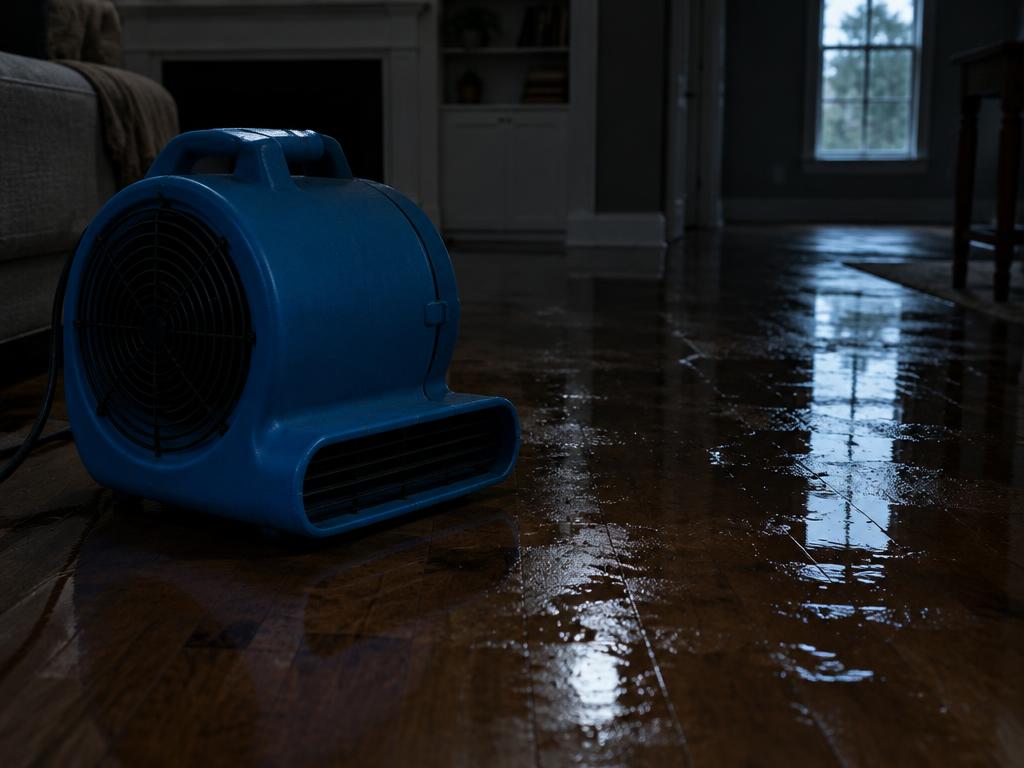
Air movers and dehumidifiers dry walls, subfloors and framing. Moisture readings are taken along the way until materials reach normal levels.
4. Cleaning and repair
Affected areas are cleaned and, where needed, damaged materials are removed and replaced so the space is ready to use again.
Why speed matters
Water wicks up drywall and spreads under flooring quickly. Materials left wet for longer periods are more likely to warp, swell or develop mold, which can turn a drying job into a bigger repair.
[Add details you can verify: response times, insurance billing, equipment, certifications.]